René Magritte The Surrealist Legendary Artist
We all know the mysterious, spell-binding paintings of the Surrealist artist René Magritte. But who was the man behind the apple? Read on to see which disturbing yet formative experiences brought about the creative inspiration that rendered him legendary…
Belgian painter René Magritte’s dreamlike aesthetic and evocative symbols (bowler hats, cloudy dreamscapes) ensure his enduring legacy, widespread appeal, and multimillion-dollar auction prices.Yet these simple associations belie the complexity of the artist’s vision, political engagements, and important connections to major 20th-century art movements. By delving further into Magritte’s biography and late works—as well as one of his most iconic, meme-launching pictures, La Trahison des images (Ceci n’est pas une pipe) (1929),often called The Treachery of Images in English—a more complete portrait emerges of an artist who raised questions about representation and appropriation that are perhaps now more pertinent than ever.
Yet personal tragedy struck even before the assassination of Archduke Franz Ferdinand initiated decades of European angst. When Magritte was 13, his mother Régina committed suicide by drowning herself in the Sambre River.
1. A tortured childhood
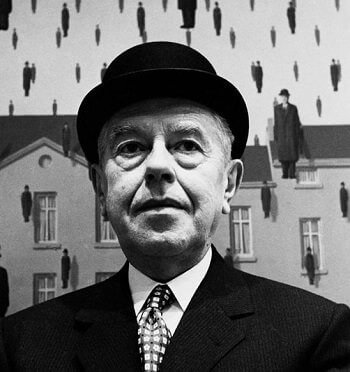
René Magritte’s childhood was a disturbing period in his life. Born in 1898 in Lessines, Belgium, his family often moved due to their financial difficulties. When he was only 12 years old his mother took her own life by jumping into the Sambre. This event was of course impressionable, especially given its timing – during some of the most formative years of his life. Nonetheless, the artist resented the fact that his works were psychoanalysed through this lens.
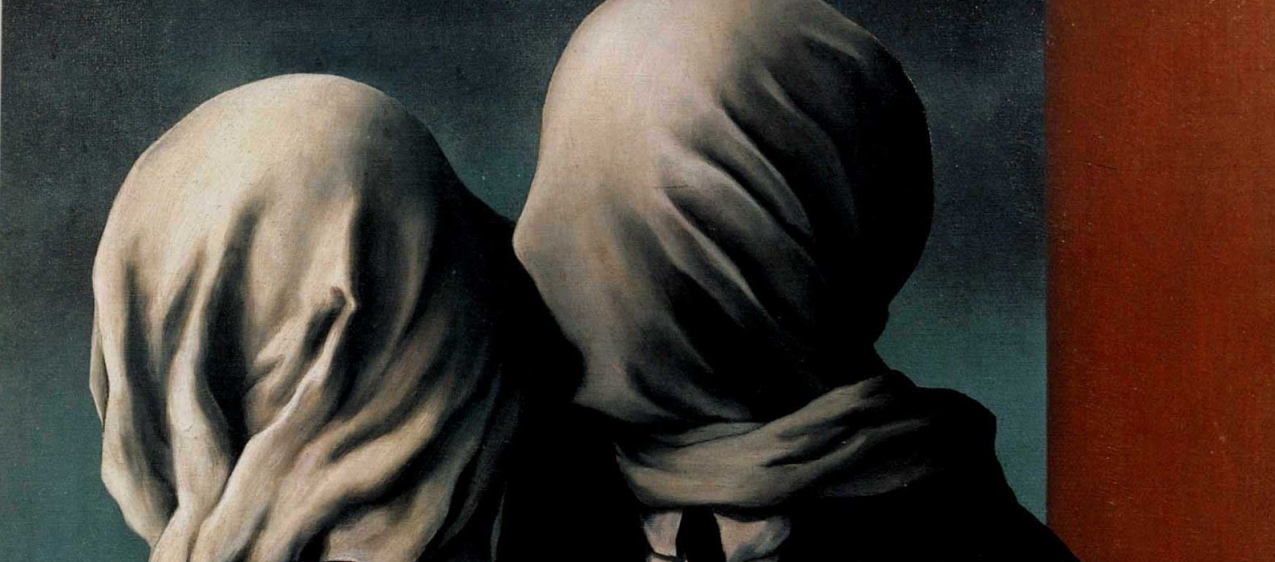
However, some of the art historical analysis is noteworthy. For example, the veil that covers the woman’s face in The Lovers is similar to the dressing gown in which his mother was found days after her disappearance.
2. René Magritte: a complex personality
René Magritte’s childhood was a disturbing period in his life. Born in 1898 in Lessines, Belgium, his family often moved due to their financial difficulties. When he was only 12 years old his mother took her own life by jumping into the Sambre. This event was of course impressionable, especially given its timing – during some of the most formative years of his life. Nonetheless, the artist resented the fact that his works were psychoanalysed through this lens.
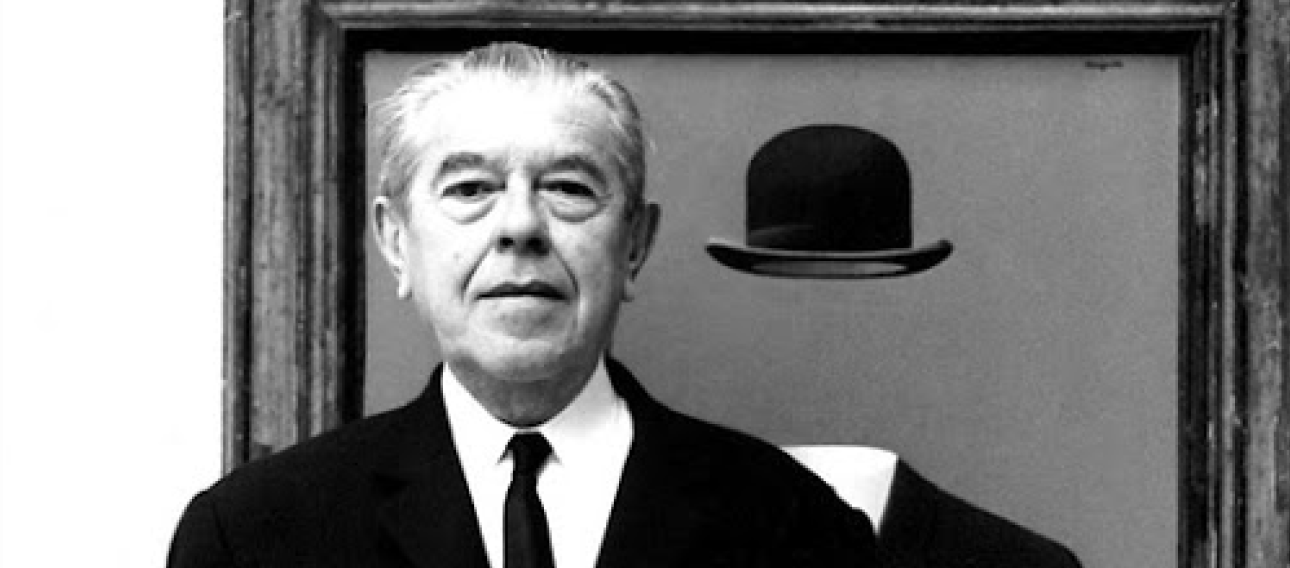
From the outside, everything seemed perfectly fine. Yet inside, he was deeply subversive. He had a mischievous childish side that was often hidden. That said, he enjoyed bringing people together through his art. It is said that he often called philosophers and writers to his studio to study his paintings in search of titles. Magritte was indeed a difficult individual who managed to preserve and hide his inner malice through his art.
3. A particular type of Surrealism
Magritte’s principal source of inspiration came from the work Love Song by Giorgio Chirico. In 1923, he discovered this unique universe in which he would (from that point on) never cease to exist. There is a real “science” behind the random placement of familiar objects which are then rendered foreign in an otherwise normal reality. Both close yet hostile, Magritte’s work disrupted the art world.
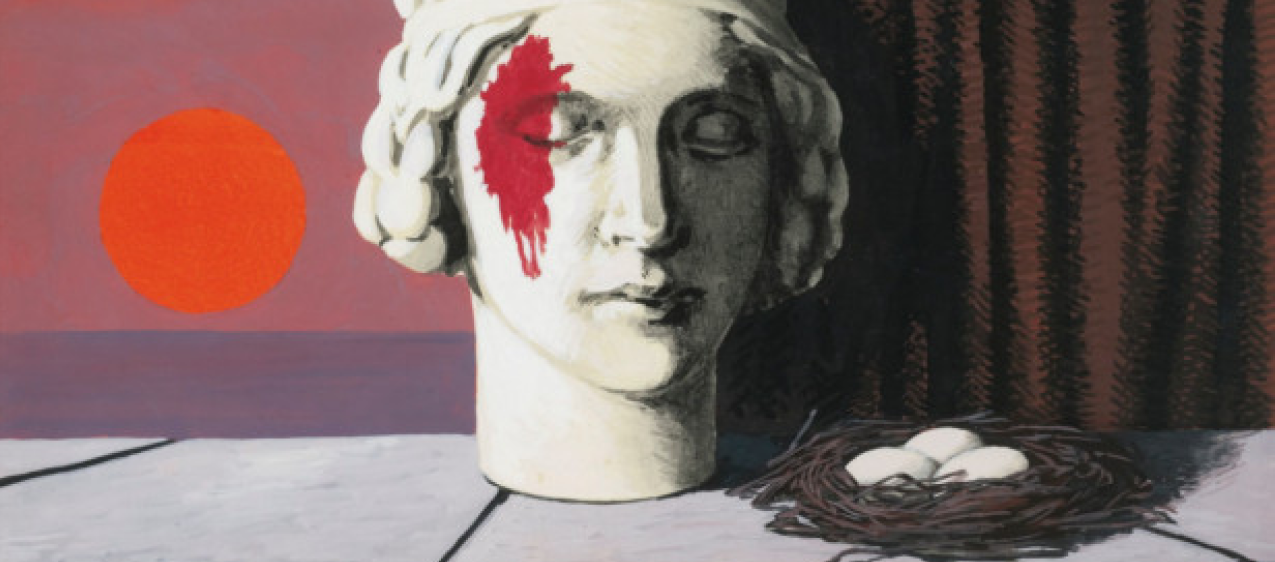
As a Surrealist artist, Magritte shifts, moves and diverts reality. However, his genre of Surrealism is a bit different from that which began in Paris. In direct “opposition” with André Breton, the Brussels Surrealists advocated for a conscious rendering of their memories, dreams and thoughts whereas the Parisian Surrealists sought to make unconscious creations that leapt from within their psyches. What’s more, Magritte’s paintings have a certain particularity about them. Without being explicitly Surrealist, his refined compositions had little to do with Dali’s complex paintings. Moreover, he was often quoted saying that everything he wanted to say is already before our eyes. That is to say, no need to dig deeper…
His Greatest Work
Magritte’s paintings convey messages. He used elements of reality in the service of mystery. Magritte was an explorer of life’s enigmas and gave way to reflection through his images. For him, they were used to express words. When he named his painting The Treachery of Images, it is clear that it is not a pipe, but rather the image of a pipe…